


The Evolution of Wrap-Ups
The Evolution of Wrap-Ups: Laws, Lessons, and the Future of Construction Risk From state-specific requirements...


Lorem Ipsum is simply dummy text of the printing and typesetting industry's standard dummy text ever since the 1500s.
Read Full Case Study

Lorem Ipsum is simply dummy text of the printing and typesetting industry's standard dummy text ever since the 1500s.
Read Full Case Study

Artificial intelligence (AI) is no longer a futuristic concept—it’s actively reshaping industries, including construction.
Tags: AI Innovation, Construction, Insurance
Read More

Welcome to the Inside Insight podcast presented by CR Solutions. Conversations with the brightest minds shaping the future of risk. Each episode, we sit down with innovators, leaders, and big thinkers who are transforming insurance, construction, and beyond. Our goal is simple, to share ideas, stories, and connections that help you grow your knowledge, strengthen your network, and spark your next big move. We're glad you're here with us on this journey of growth and discovery. Now, let's dive into today's episode.
Trevor Casey: Hello everybody, and welcome back to the episodes, the Inside Insight podcast.
Beau Lunceford: Oh man, I am glad to be back. The interview of it was recorded a while ago, and so we've been sitting on it, and I'm really excited for people to finally get to hear all about our guest today, the company that they work with, and it's going to be really great.
Trevor Casey: So, in the current atmosphere of just technology and everything, I feel like everybody hears the word AI. So, what does that mean? It can mean a plethora of things to everybody. So, I feel, this was a really fun conversation for me, because I've truly been investing a lot of my personal time into AI and looking at the different possibilities, and seeing a company that is really capturing that technology and implementing it in a way that insurance carriers and claims consultants and people can actually use it is awesome.
Beau Lunceford: AI is such a buzzword right now, so getting to see what does that actually look like, especially in the insurance space, which has a tendency to be a little bit behind the eight ball when it comes to innovating, which we see every single time we have one of these episodes that there are people who are innovating in the insurance space, that they are taking those big swings to go forward and make their companies and their teams and their processes function better. And our team over at Findevor, who is our special guest today, really does that and shows that. So, before we dive in, I'm going to tell you a little bit about our guest today, Alex Valdes over at Findevor. Alex Valdes is the co-founder of Findevor, an insure tech startup launched in 2024 to bring agentic AI into the underwriting process. Alex is no stranger to disruptive technology, though. Before launching Findevor, he helped scale an AI FinTech to a successful IPO and NASDAQ listing, where they build AI tools as a part of the credit underwriting process. Now he's turning his expertise towards insurance, where inefficiencies in underwriting and portfolio strategy cost the industry hundreds of billions of dollars a year. At Findevor, Alex and his team are pioneering the use of agentic AI to help carriers unlock profitable growth. Their platform enables underwriters and executives to run real-time portfolio reviews, detect litigation, abuse trends, and optimize performance, all while reducing the manual workload and servicing insights that would otherwise take teams weeks to uncover. In this conversation, we're going to dive into Alex's journey from FinTech to insurance, the evolution of underwriting in the AI era, and what the future looks like when insurers can move from reactive decision-making to proactive intelligence-driven growth. Whoa, that's a lot of big words.
Trevor Casey: Let's get into it, though.
Beau Lunceford: Let's do it.
Trevor Casey: Welcome back to the Inside Insight podcast. We are joined today by Alex Valdes, the CEO and co-founder of Findevor. Hey, Alex, how are you?
Alex Valdes: Good. How are you guys doing?
Trevor Casey: Good, good. We're really thankful to you for joining us today. We're excited to learn more about Findevor and the different applications that you guys have been putting out into the marketplace. One of the things that has been a really hot topic for our podcast lately is just AI and the way that AI is changing the landscape of insurance, insurance administration, and the products that you guys are putting out are extremely interesting. So with that little teaser there, I'm going to kind of toss it over to you to tell us a little bit about yourself and a little bit about Findevor.
Alex Valdes: Absolutely. First of all, appreciate you guys inviting me in. Always fun to catch up with you. So a little bit about Findevor. We are a portfolio management platform for property and casualty insurers. The best way to think about what we're building is effectively a digital data analyst that a PNC portfolio manager or underwriter or data analytics team can use to make better sense of their messy internal data. So that's claims and policy data. It extract out various insights from that data, like we're wanting to shape our book, we're wanting to expand into a new market, into a new risk class. How do we do that? Can we find those attributes within our internal data that correlate with profitability and can generate some sort of a proposed action? So our agent having full context of the business. The appetite, the restriction, the goals that the specific team or the carrier has is able to orchestrate a workflow starting with that internal data and then look to even external data sets to enrich analysis. So we can pipe in additional data like leading indicators from OSHA violations, if we're looking at legal risk for employers within a certain risk class. So it can bring in that external data, enrich the analysis and then perform different types of analytics. So we can do retrospective analytics, but we also can do perspective analytics where we're looking at, if we find some kind of insight from these data sets and now we want to propose an underwriting action to restrict or expand appetite in a certain area, what will the impact be on the portfolio. What's the impact to premiums, to losses and ultimately profitability? So we're building this platform. It's a digital data analyst. We have various use cases that we've sort of productized the functionality of the platform towards. For example, last week, we launched a product for legal system abuse. So this is an orchestrated workflow using our agents, using all the functionality, using the different specific data sets to help carriers reduce legal risk and solve social inflation, which is impacting everybody.
Trevor Casey: One of the things that you just said is very interesting to me because I've been hearing a lot of buzz around it lately, which is abuse of the legal system, specifically with workers' comp claims, fraudulent claims or claims that are somehow, whether it's the doctor or the person's not real or whatever they may be doing to defraud these insurance companies. And I think that that's a really big hot topic for carriers right now, because litigation is expensive, paying out claims are expensive and anything that they can have to really highlight, this is a glaring risk or these analytics are things that you need to look for. I'm really curious on that part, but just in general on some of these analytics, here's 100 analytics that we know are perspective and retroactive that we want to look into or can an underwriting team come to you and say, ‘Hey, we're looking to expand to this new market and these are the 15 key indicators that we're looking for’. How do the indicators really found or brought out utilized?
Alex Valdes: Great question. And this is one that we get a lot of times from underwriting executives. So chief underwriting officers, the data executives that we're working with and some of our design partners. The short answer is it's a little bit of both. So certainly the agent works best by starting with a hypothesis. So if we're building this from the ground up, we start with hypotheses and we really kind of build out that knowledge base, all the various data points to help the agent build more context around that, your specific business. And then over time, and this is kind of the next level where we've gone with AI from, we've gone from software where there's no AI to RPA and the dynamic RPA. And then now we're kind of getting into that next level where the agent is not only can do the things it's programmed to do, but it can learn from the things that it's done before. And it has agency in deciding it based on the context and the learnings that I've had previously, what next step can I suggest we take? The human's always going to have control in the process to whatever extent they want, but the agent's always able to propose and improve what it proposes over time based on its learnings. And that's really where the power is. And that's really why we say that what we're building a digital data analyst. You can call it a junior data analyst on your team that you've hired, but works 24/7, doesn't have a lot of the pros and cons, doesn't do the things that we want humans to do. So we're not looking to replace data analysts, what we're looking to do is free their time and doing those things like running endless SQL queries and basic analytic work that AI and technology can do today.
Beau Lunceford: I think that's a really encouraging thing to hear too is because I keep hearing people be afraid of AI's coming from my job and I'm going to be out of work and out of business because AI, but reemphasizing more people that we talk to who are in the AI space are reemphasizing this idea of like, ‘No, it's not there to replace you, it's there to enhance you, it's there to make you more efficient with your job, it's there to add on those tasks that like you're saying are running those endless queries and doing the dumb stuff that nobody wants to do that can be automated.’ So I think that's a very important thing to emphasize here that if Endeavor is not coming in to take jobs, it's coming in to make more effective the work that your people are doing.
Alex Valdes: That's right, and that's always been the case in history. Largely, people have to reskill, horses are no longer employed for as much with pulling buggies. We have combustible engines, we have vehicles. A great example is accounting software. There's like 10 times or more probably now since last time I saw the statistic of accountants out there after QuickBooks and Xero and all those other software were created. So these software don't eliminate jobs entirely, they free up the work so humans could do more of the human work. And now that's why our approach is not really around strictly operational efficiency. I mean, there is that. There's cost savings anytime you adopt a new technology, but what we're more focused on where the value and the meat is, is the capabilities that were previously not possible are now possible. And letting the human leverage that tool to do the things that we couldn't do previously.
Trevor Casey: One of the things that I think is very, it's kind of for all industries, but with insurance in particular is, a lot of people, they talk about AI is going to take my job. I think that a lot of these white collar jobs like insurance brokers and carriers and such, like you said, there has to be a person in there who's making some decisions because you do operate in a gray area to a degree where you have to make some assumptions. But I think the biggest pushback that I've seen from a lot of carriers is not that they're worried about jobs being taken from their people, but they're worried about their data. Since their data is their secret sauce, they feel that whatever they have created and that tool that they have of data is what sets them apart. So one of the things that I'm curious with this AI model is since it uses its knowledge based off what it's learned to predict and create stuff, does it use, let's say, ABC company over here and XYZ company? Does it compile that data and learn from the two of them and share insights? Or is it truly like, this is my protected data, my agents know my data, they don't know anything about X, Y, and Z? And what are kind of some of those safeguards attached to that?
Alex Valdes: Absolutely. Great question. Obviously one that we get during technical due diligence all the time. And it is a good question to ask. We do not rely on training our models with customer data in order to improve the value of our platform. So it's not necessary. And we absolutely segment out the sensitive data. Actually with our platform, we don't even necessarily need to see any PII, any personally identifiable information. My last 10 years was in cybersecurity. So data privacy and data security is an intimate topic for me. And it's one that we've taken very seriously in our data posturing from the beginning. So it's not necessary to, again, train the data against other sets. The best way to think about our platform is we're really providing the tooling for you to make better use of your existing data. We're not necessarily saying that, hey, we have this silver bullet proprietary data set that nobody else has. The reality is a lot of those capabilities, a lot of that data is sitting out there, much of which is off the shelf. But the hurdle is not necessarily getting to the data. It's just being able to identify the data, but it's being able to use it and use it effectively. So we're giving the tooling so we can bring in that data, we can help make better sense of internal data, and then we can actually produce some sort of personalized actions based on what we're looking at.
Trevor Casey: So I'm just curious, some of the different carrier clients that you have spoken to or worked with, what are some of the ways that they're utilizing this program, this platform? Are they plugging it into other software solutions that they have and it's compiling into a dashboard? Is it sending them a report? Is it something they need to proactively use like an agentic AI where they're asking it questions and getting a response? What would be the day-to-day of a user and how would they access the value that Findevor adds?
Alex Valdes: Absolutely. So the most immediate value add is simply being able to interact with your data through natural language. Our whole platform is built in a way that it doesn't require technical IT resources. It doesn't require a dependency on Findevor if forever and ever. We built the platform, we designed the platform with the impetus of making it user-friendly for a non-technical user. So, again, to interact with the data. The driver was the very first conversations. We have something like 300 hours of transcribed conversations that we collected during customer discovery. And all of it's from chief underwriting officers to CIOs, COOs, in the top 100 PNCs. And the biggest prevailing theme that came out of everything was a scenario, you can imagine a scenario where I'm a CEO over a specific book in a geography, let's say commercial property in the state of Michigan. And I've been tasked with growing premiums. But not like startups where you can grow at all costs. We need to grow and grow in a profitable way. But the problem is, how do I do that? I want to go to our data, I want to look at my book, and we want to see are there opportunities and places that we can shape, we can reduce areas that are risky, that are high loss. Are there other opportunities for us to expand our appetite a little bit? And just to be able to start that process requires a long queuing system of corralling IT and underwriters and operations people and actuaries who already have a full load. So we've got to get in queue and say, hey, look, I just want to say, let's say hypothetically today, we know that we have a profitable book in personal auto, but we're not issuing any policies in Michigan for commercial auto. Can we analyze those personal cars to identify those attributes that correlate with profitability and personal lines? Again, that's a very long process. I could take many weeks, many months, sometimes it's just not possible. Whereas with our system, now the user can go directly to the agent and say, hey, connect to our policy and claims database for personal vehicles. Let's segment out those vehicles. Let's say in Michigan that have snow tires versus those that don't have snow tires, for example. So we can analyze the loss ratios for those with and without snow tires. Can we extrapolate? If we find out, there's a 50% lower chance of loss with personal auto with snow tires, can we extrapolate that onto commercial auto? So maybe we can start issuing policies in commercial auto, but only for those that have snow tires. So our agent having the full context of the business and that analysis backing it up, we'll say, let's produce a series of underwriting guidelines that we can now apply for commercial auto. And then there's no guarantee that it's going to be profitable or not, but what we do know is that we're going into this decision with data-backed confidence, essentially. And all that done in a matter of minutes versus weeks and months and with a user who could be an executive, a CEO or whoever, just interacting directly with the agent as if you're talking with another employee.
Trevor Casey: I mean, it's mind boggling. I'm kind of at a loss of words thinking of all the things that this can do and just AI in general. It's kind of terrifying and cool all at the same time. You speaking to auto is very interesting because we had a conversation the other day with a gentleman who was talking about how that's one of the industries right now that they're seeing is hardening up the market because of so many catastrophic claims. Because like you said, snow tires, I mean, that could be this small change of traction on a car that slides into an 18-wheeler or snow chains for an 18-wheeler. It's just very interesting because it seems like a lot of people are having these catastrophic losses partially because of incompetence and partially because of the lawyers that love to win these litigations against insurance companies. So I think that tool alone is just in the auto, don't even discuss property and casualty on other lines, is a billion dollar ticket for some of these insurance carriers. I mean, mind-boggling. But one of the things that I'm curious to, you said that it's an agentic AI model where you're talking to it using human language and creating, getting that data, it's awesome. We'll pick on Beau for example. Let's just say Beau, as far as technology comes, we'll just call him as dumb as a box of rocks for this example. And he doesn't know what to ask. So are there cues that you guys are teaching individuals or the model knows what to ask to get the person to learn, this is how you use an agentic model or this is how you ask a thing? Because I feel like there could be some people who could just talk to it and they would just enjoy having a person to talk to and not necessarily get where they're trying to go.
Alex Valdes: Great question. And clearly you guys have done this before with the examples. Look, great question. And to say that we just drop off the software and then see you later, good luck, try to figure it out is a bit of an oversimplification. Our approaches, especially early on is a little bit more engaged. So when we sit down with a carrier or an MGA and PNC, we'll say, ‘Look, let's think about what are your highest strategic priorities. What are we trying to do? Are we trying to grow a top line?’ We want to grow in a profitable way, move into new markets or we don't want to add a single dollar premium to the book, we're just trying to improve overall profitability. So it's going to vary from carrier to carrier. And then we say, let's think about what are the biggest pain points? What are the strategic priorities? And then ultimately, how can we configure these workflows and build out, kind of productize the platform, the agent so that way it's connecting to specific data sets. Ideally, we typically, the approach we like to say is, how can we minimize our reliance on internal data. Can we find a use case and a priority that we don't have to look at 15 different data sets and unstructured, really lousy data, we can use some of the better data that is currently being utilized but maybe not to its full potential. And then again, kind of orchestrate a workflow to get that outcome that they're looking for drive that dream outcome. And what's ideal for us and what we're always looking for when we're setting this up is we want to get a use case where we can get the most juice from the squeeze. We don't want to clean up one data. Let's say we've got some lousy data, we don't want to clean up the data and bring in some external sets, just for one question. Like for us ideally is we want to slice and dice these different sets up to produce new insights. So going back to the commercial auto, maybe instead of Michigan, we want to look at California, we want to look at Florida. Maybe we want to think about commercial auto and not necessarily just for profitable growth. We want to think about, do we have any legal exposure? Are we getting hit by plaintiff firms and in Louisiana, for example, for distracted driving? This is a demo that we go through a lot. That we've identified. If we can identify a spike in claims in Louisiana, for example, for a commercial auto. And then again, I'm just going to go through another use case here which is related, but just again using the same sets. So we're looking at claims. We see a spike in claims in Louisiana for semi-trucks. Well, the agent, again, having full context and knowing that our objective here is we want to reduce legal exposure. It can say, let's do an external search. Let's do a deep research on trends in the marketplace to see what is causing lawsuits in Louisiana for trucking companies. We know this a lot of it's coming from distracted driving. So it's a beautiful, it's a judicial hotspot for distracted drivers and semi trucking companies. But the AI is also able to identify preventative measures because it's got a lot of data behind it. So it says, hey, look, the strongest preventative measure for distracted driving could be, is lane departure warning systems. So we can say, let's go back to our internal data, segment out those claims for trucking companies that had a warning systems versus those that don't, look at the loss ratios. And then from that, we can propose actions such as an underwriting guideline. Look, we're not going to accept any more submissions. We're not buying anything else in Louisiana for trucking companies that don't have lane departure warning systems. Then the AI can simulate what will the impact be if we're sitting on historical policy data, then we can simulate what would the impact would be of that action. So it's really quite dynamic. Again, kind of the short and summary is we really try to think about those use cases where we can slice and dice things and get the most juice out of the squeeze.
Beau Lunceford: So whenever you have somebody who is, let's say, hesitant about adopting an AI model, moving into this, what is your appeasement? What is your, hey, don't worry, it's going to be so easy and it's going to be so great. What does that kind of pitch look like? Because I imagine there's a lot of people who are listening right now, who are going like, ‘Yeah, sure. I know I need to adopt AI. I know I need to get in, but I don't know how to do that. What do I do? It's going to be too hard.’ So what are you saying to those people?
Alex Valdes: So usually that's coming in like, look, we are sitting on 20,000 underwriting guidelines, or we're sitting on huge data sets globally from legacy systems that were kind of patched together during a series of acquisitions. And for us, our thing is like, look, we don't have to eat the whole elephant here with one bite. There's a big universe of data. There's a lot of opportunities. Go from where a lot of carriers are today, which in 5, 10 years outdated technology. I saw this in FinTech in the 2010s when I was building software for big banks. During the FinTech revolution in the 2010s, I always referred to the famous example, and I see a parallel in insurance today that was in banking. In 2011, Amy Dynan famously said, ‘Look, this whole cloud thing is a fad. It's just a passing fad. No one's going to, it's not going to stick’. You fast forward to 2019, CEO of Bank of America said, ‘Today Bank of America is a technology company.’ And we're seeing the same thing now in insurance. So it's right that companies are five, 10 years behind. We take it in small steps. We eat this elephant with one bite. We look at specific data sets. And again, we go to those highest pressing strategic priorities and then solve for that and then move out. So it's kind of taken in small increments. The beautiful thing, and what I love about what's possible in AI, this is the feedback that we've gotten from executive teams. It's funny, they always highlight, if they ever talk about what are the things that they love about our platform, one of the first ones is always the UI. It's always the user interface. I've been doing this for a long time, you never hear that answer. It's the UI, but the reason they say that is because with this platform, it's not like I've got to get my 100 data analysts and my actuaries and hundreds of people to learn this monolithic platform and spend hours in training and tens of thousands of dollars in trying to figure out how to use it. It's just one entry point. There's one chat interface, all using natural language. We even build the knowledge base with natural language inputs. So that's the kind of the beauty of where we are today, that the ease of the UI really kind of eases that concern around are we going to be able to learn to use this?
Trevor Casey: Josh in our company has really jumped on the slogan lately of innovate or die. And you've really spoken to that, where if people are not adopting these resources and tools that are being created to make their job easier, more effective, their communication better, the list goes on and on, they're really going to fall behind. Like you said, right now, it's not necessarily a glaring issue. Three to five years from now, if you're not on the AI or the technology bus, you're probably getting left behind in the desert.
Beau Lunceford: Especially, like we're saying, if you're already five years behind technology-wise, and then you see AI being introduced, and then you're going to wait another five years to start trying to introduce it into your systems and your procedures, you're a decade behind because you didn't act when you could.
Trevor Casey: You're a century behind, really, in the grand scheme of things, how fast technology moves.
Alex Valdes: It'll be like being in your 2000 into the early 2000s without having adopted desktop computers. It's like that, but probably more exaggerated. Look, a lot of experts out there have estimated, you hear all kinds of statistics. McKinsey said that insurance companies that are kind of first movers in adopting AI will see a 20% improvement in their combined ratio over the next 5 to 10 years. I mean, dramatic statements like that. So we'll see. It's a combination of operational savings. We're lowering the cost to actually do our work and then we're improving our loss ratios. I mean, I think even more than that, it's about getting into markets and previously we just didn't have the insight or confidence to do. Now we've got tools that can give us that confidence backed by data.
Trevor Casey: Absolutely. This has been an eye-opening conversation. I've learned a lot. Your system is so cool. I'm really excited to see what you guys continue to create and how much value you're bringing to these carriers and just seeing that from what I've heard, they're singing the praises. So that's awesome. And Alex, we really appreciate you sharing some with us. I don't want to dive too, too much because it's just a little teaser for everybody. We do have somebody else from Findevor joining us on a later episode, actually going to dive into the ones and zeros of what it looks like to actually build an AI. So with that, Alex, we have had a question that we've started asking everybody at the end of our episodes, and it's what's your inside insight? So everybody wakes up every day, they go to work, and you chose to be in technology and specifically insurance technology for lack of a better term. So just curious, what is it that drives you, keeps you going, and makes you want to come to work every day? Is it a quote? Is it a poem? Is it a song? Is it a mindset? I’m just curious, what is it that makes Alex tick and just continue to drive this system to the moon?
Alex Valdes: Absolutely. I think it's a great question and certainly would be interesting to hear everybody's responses to it. But for me, it's mission-based, but not just like, hey, we drafted up some company mission, but it's a personal mission. I see my contribution to this world as effectively bringing good to the world. And what motivates me is especially around technology is, and I've seen technology as the single greatest and most powerful force in improving the quality of people's lives. Right now we're at that stage where we can build tools to improve and basically enhance the decision making and therefore the outcomes for everybody. And ultimately for me, what drives me is, we even plug this into our mission's name is basically democratizing opportunity. Democratizing opportunity by enhancing human intelligence. We're not saying, we're trying to automate workflows so we can replace people. We're wanting to bring opportunity to everybody, whether if you're a business, whether if you're an individual, and we do that by building AI tools that enhance the intelligence of a single individual. And that's exactly what we're doing at Findevor. And I think, for me, ultimately that brings good to the world, improves the quality of people's lives. And who knows, eventually once AI is generalized, then the cost of goods and services go to zero. Either we'll all be sitting on a beach and doing nothing, or we'll be painting on easels or something, which I think that sounds like a pretty good life too.
Trevor Casey: That's awesome. I don't know if I want to paint on an easel and just sit on the beach, but I find something to do with my time.
Alex Valdes: People don't want me painting on an easel, is what it is. You can paint, though, like one of them French ladies. Is that what the saying was from the old Titanic movie?
Beau Lunceford: Paint me like one of your French girls.
Alex Valdes: There you go, there you go. Well, it's an option.
Trevor Casey: Alex, this has been awesome. The insights that you've provided, the product that you've created is so valuable. And we really appreciate the time, the effort that you guys are continuing to put into this product, and the resource that you've become. So thank you for your time. Thank you for sharing with our listeners more about Findevor. Something comes out of this for you. And as always, for all of our listeners, all of Alex's information, Findevor information, will be in the show notes. So feel free to reach out to him, book his calendar up. It's probably already booked up, but you can probably find some time in there. Learn more about Findevor, and let's just continue to build this insurance machine as a whole. The industry's so large, but so small, and it's just exciting to see, you know, where we're headed to the future. So thank you again, Alex.
Alex Valdes: Thank you both. Enjoyed it very much. Always fun hanging out with you guys.
Trevor Casey: Awesome. See you next time.
Alex Valdes: See you.
Trevor Casey: So at the beginning of this episode, you said that your intro was a lot of big words due to what Alex and his company does. Do you feel like you have some better understanding now of what those big words are?
Beau Lunceford: I do. I do. But at the same time, everything that they do still feels really over my head. But it's very clear though, what kind of application, what Findevor is doing, could have to companies now. Even if I don't fully understand all the pieces of it, now I have a better understanding of it. And it makes me optimistic. I mean, at the beginning of the episode, I also said like, insurance companies are not innovating in the way that, I think that they should be. But when companies partner with people who are like Findevor, they take that big swing. They take that big leap into doing things in a more effective and efficient way. I love the thing that we said at the very beginning about moving away from reactive decision-making to proactive decision-making. Especially, when you're dealing with risk, that's a huge piece of the puzzle that you have to have in place.
Trevor Casey: And I feel like a lot of people really are reactive. We see it ourselves here. You just have an inbox that's bogging you down and you're just trying to snap things away to clear up that number. You're not proactively thinking ahead. So having a company such as Findevor putting technology out there and really giving you access to the tool shed, you may have been digging with a shovel. Alex comes in with an excavator. So he really is truly helping you move dirt in that instance. And that's just incredibly valuable to carriers. So Alex, thank you again for joining us. As always, all of Alex's information, contact information will be in the show notes. We encourage you to reach out and learn a little bit more about Findevor and what they're doing and have on the horizon for 2026. So thank you, Alex. And until next time. Stay covered.
Thanks for tuning in to Inside Insight presented by CR Solutions. We love bringing you these exciting conversations with the people shaping the future of risk. And we hope today's episode sparks something new for you. If you enjoyed it, follow, rate, and share the show so more listeners like you can join the conversation. Got a question or idea you'd love for us to cover? Visit c-r-solutions.com/podcast to connect with us or email us at info@c-r-solutions.com. You'll find all this information, including ways you can connect with our guests in the show notes. That's a wrap on this episode. Join us next time on Inside Insight podcast presented by CR Solutions. Stay covered.


The Evolution of Wrap-Ups: Laws, Lessons, and the Future of Construction Risk From state-specific requirements...
Listen to the full episode here! PODCAST OPENER Welcome to the Inside Insight podcast...
The Mother of Wrap-Ups: How Karen A. Frankel Shaped an Industry Before wrap-up administration...
Listen to the full episode here! PODCAST OPENER Welcome to the Inside Insight podcast...
Listen to the full episode here! PODCAST OPENER Welcome to the...
Brave New Code: Inside the technology turning insurance data into actionable underwriting intelligence Artificial intelligence...
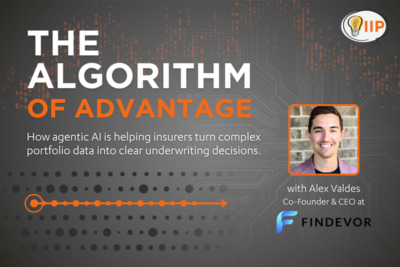
The Algorithm of Advantage: How agentic AI is helping insurers turn complex portfolio data...
The Future Is Flowing: How Insight Risk Is Reinventing Builders Risk Water damage is...

Listen to the full episode here! PODCAST OPENER Welcome to the Inside Insight podcast...

The New Rules of Risk: Rocio Luna on Evolving Risk Management Season 3 of...
Listen to the full episode here! PODCAST OPENER Welcome to the Inside Insight podcast...

Listen to the full episode here! PODCAST OPENER Welcome to the Inside Insight podcast...
